The Masai Mara can deliver two fundamentally different safaris in the same reserve depending on which season you visit. Light quality shifts, grass height changes, crowds move in and out, and wildlife follows its own seasonal logic. Understanding what actually changes — and why — is the most useful preparation for choosing your window.
Here is a practical breakdown of how each season works.
The Masai Mara’s Two Main Seasons
Dry season: June to October (long dry) and January to February (short dry). The long dry season is when the Great Migration arrives from Tanzania. Vegetation dries and shortens, water sources concentrate, and the savannah takes on the classic golden look.
Wet season: March to May (long rains) and November to December (short rains). Rainfall is most intense in April and early May. The Mara transforms into a lush green landscape with fuller rivers and dramatically different photography conditions.
How Dry Season Changes Wildlife Behaviour
Water Dependence Concentrates Everything
When water sources reduce across the dry season, all wildlife moves toward permanent rivers and water holes. The Mara River and Talek River become focal points for elephant herds, hippo pods, buffalo, and the predators that follow them. This concentration is the fundamental driver of dry season game viewing quality.
Predator Visibility Peaks
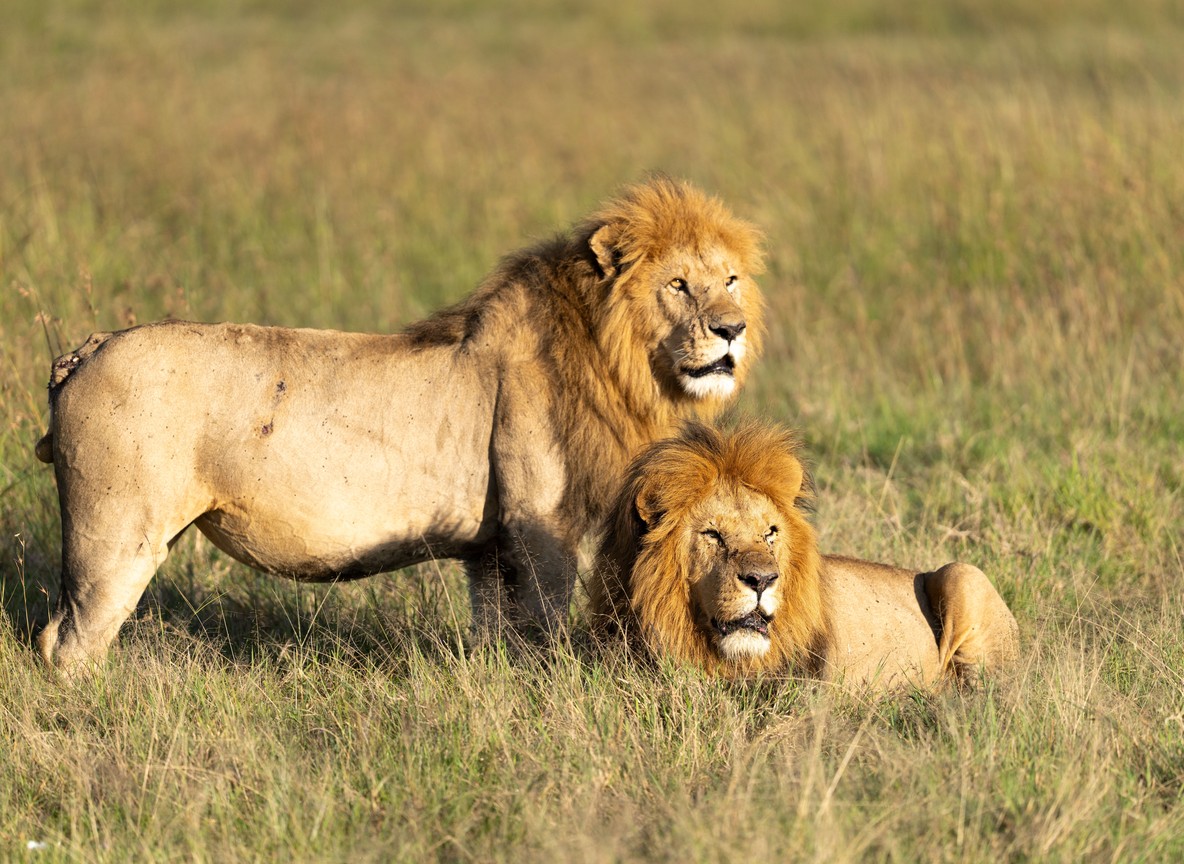
With grass short — often less than 30 centimetres as the dry season progresses — lion prides, cheetah coalitions, and leopards have significantly less cover. You can spot them from much further away, follow hunts more easily, and access kills without vegetation blocking the view. Lion prides are more active and more openly visible during daylight hours. This is some of the clearest predator viewing anywhere in Africa.
The Great Migration Arrives
The most significant dry season wildlife event is the wildebeest migration (July to October). More than two million animals — wildebeest, zebra, and Thomson’s gazelle — enter the Masai Mara from the Serengeti. The Mara River crossings draw enormous crocodile and hippo activity, and the full predator suite follows the herds. This is a dry-season-only event.
Visibility Across the Board
Short, dried grass improves the mechanics of game viewing substantially. Animals that would be obscured in tall vegetation are easily spotted at 200 to 300 metres. Spotting is faster, sightings are more frequent, and photographic backgrounds are cleaner and less cluttered.
How Wet Season Changes Wildlife Behaviour
Animals Disperse Across the Ecosystem
When the rains arrive, the Mara transforms. New grass flushes green across the plains, creating fresh pasture everywhere. Animals no longer need to concentrate at water sources. Herds disperse widely across the full reserve and the broader ecosystem, which means lower sighting frequency in any single area — but wildlife is genuinely present across a much wider range.
Calving Season Intensifies Predator Activity
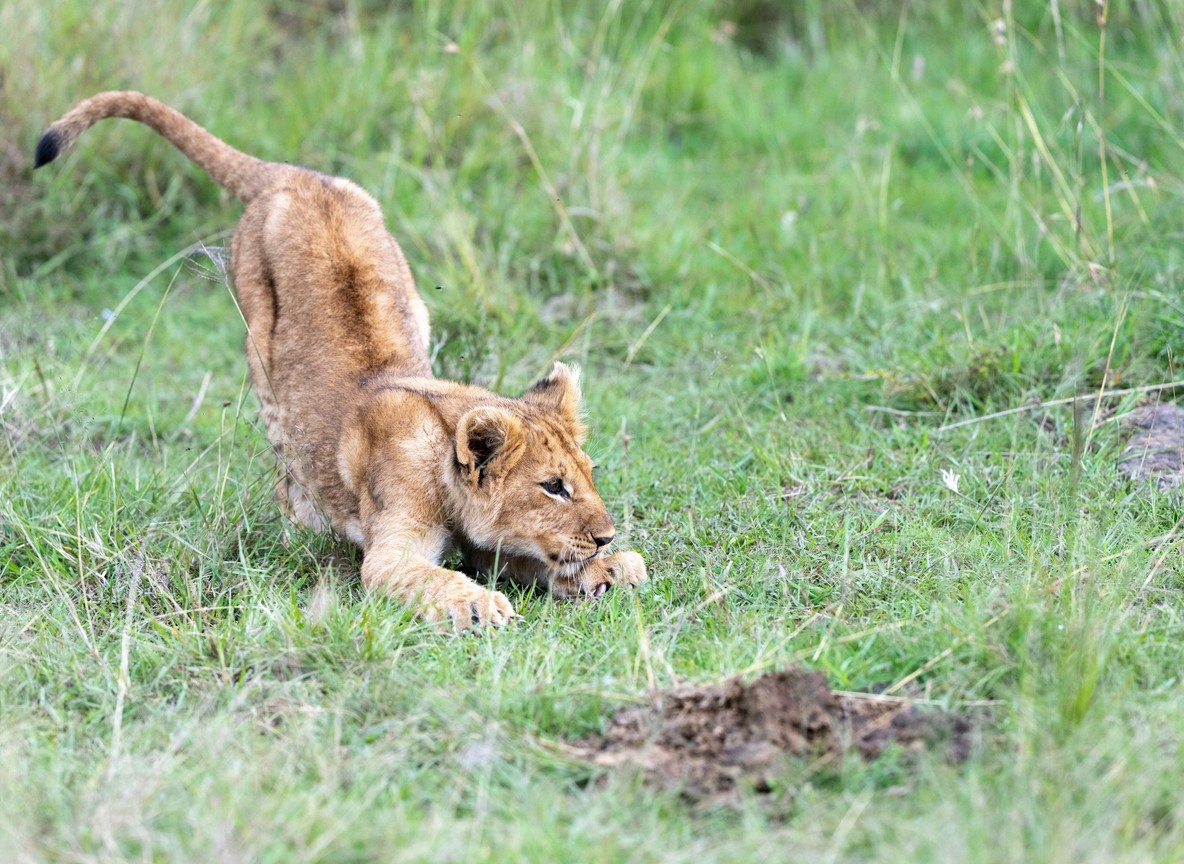
January to March is the wildebeest and zebra calving season on the southern Mara plains. Thousands of calves are born on the grasslands, and predator activity intensifies sharply around the young animals. This is one of the most dramatic wildlife behaviour windows of the year — intense predator focus, high calf numbers, and territorial behaviour among lion prides competing for calving grounds.
Predator Sightings Shift in Character
Predators are harder to find when grass is tall, but the wet season can still produce extraordinary encounters. Leopards often become more prominent — the lush vegetation and fewer tourist vehicles during low season mean they may be more relaxed and visible in the trees. Cheetahs move to elevated ground and open termite mounds to scan across taller grass. Lions remain active across their territories.
Birdwatching Peaks
The wet season brings extraordinary birdlife. Migratory species arrive from Europe and Asia. Resident birds breed, display, and nest. The Masai Mara’s recorded species count passes 500 in the wet season. For birdwatchers, this is the genuinely better season — richer waterbird activity, more migratory species in residence, and the kind of birding diversity that makes the Mara a serious destination for non-mammal wildlife.
Visual Drama in the Landscape
The green season landscape is dramatically different from the dry season aesthetic. Lush grass, wildflowers, and softer, more diffuse light create photography conditions that bear no resemblance to the golden-dust dry season palette. Wide-angle landscapes are at their most photogenic when green.
Direct Comparison
| Factor | Dry Season | Wet Season |
|---|---|---|
| Grass height | Short to bare | Tall and lush |
| Sighting frequency | High | Moderate |
| Wildlife concentration | At water sources | Dispersed across plains |
| Predator visibility | Very high | Moderate |
| Great Migration | Yes (July to October) | No |
| Calving season | No | Overlaps wet/dry transition (Jan-Mar) |
| Birdwatching | Good | Excellent |
| Road conditions | Good to excellent | Challenging in places |
| Crowd levels | High | Low |
| Accommodation pricing | Peak (July to October) | Lower (especially April to May) |
| Landscape photography | Classic golden savannah | Vivid green, dramatic skies |
| Wildlife photography | Clean backgrounds, high contrast | Lush green backdrops |
Which Season Is Better for You
There is no universally better season. There is a season that fits your priorities better.
Dry season is the right choice for:
- Maximum sighting frequency and wildlife density
- The Great Migration and Mara River crossings (July to October)
- Predator hunting visibility on open grassland
- First-time safari visitors who want the highest probability of multiple big cat sightings
- Wildlife photography with clean, unobstructed backgrounds
Wet season is the right choice for:
- Birdwatching (500-plus species, migrants, breeding displays)
- Calving season drama — predators and newborn prey, January to March
- Quieter game drives with fewer competing vehicles at sightings
- Lower accommodation rates and significantly better value across most camps
- Landscape photography and dramatic green scenery
- Repeat visitors who have done the dry season and want a genuinely different experience
Explorer Notes
- If this is your first Masai Mara visit, dry season — and specifically July to October for migration — is the clearest recommendation. You will have high sighting rates and the defining spectacle of the ecosystem.
- If you have been before, the wet season offers a Mara that most visitors never see: quieter, more atmospheric, and in many ways more rewarding for serious wildlife observation.
- January and February sit in the short dry season window and are often underrated — good predator viewing, calving season beginning on the southern plains, and meaningful crowds below peak levels.
- There is no bad time to be in the Masai Mara. The question is what kind of experience you want, not whether the reserve will deliver.
What to Read Next
Understanding how season shapes wildlife behaviour is the foundation of any good Mara planning decision. Once you know which version of the ecosystem you are optimizing for, every other planning choice — camp location, drive structure, length of stay — becomes easier to make.
Turn this reading into a real itinerary with help from a Kenya-based safari team.
Start Planning Your Safari